




What Is an Endodontist? A Real-World Guide to the Dentist

I still remember the first time someone told me I needed to see an endodontist. I’d never heard the word before, and honestly, my first thought was that it sounded like something out of a sci-fi novel. It’s not. It’s a real, highly trained dental specialist, and understanding what an endodontist actually does can save you a lot of confusion, anxiety, and — if you catch things early — a lot of pain.
This article breaks down exactly what an endodontist is, what separates them from your regular dentist, when you actually need one, and what to expect if you’re ever referred to one. I’ve tried to write this the way I wish someone had explained it to me the first time, without the jargon-heavy language most dental websites bury you in.
Table of Contents
- What Is an Endodontist, Exactly?
- Endodontist vs. General Dentist: The Real Difference
- Endodontist vs. Oral Surgeon: Don’t Confuse These
- What Procedures Does an Endodontist Actually Perform?
- How an Endodontist Diagnoses Problems
- What a Root Canal Visit Actually Feels Like
- Technology in Modern Endodontics
- How Much Does an Endodontist Visit Cost?
- When Should You Ask for a Referral?
- The Future of Endodontics
- FAQs About Endodontists
- Final Thoughts
- About the Author
What Is an Endodontist, Exactly?
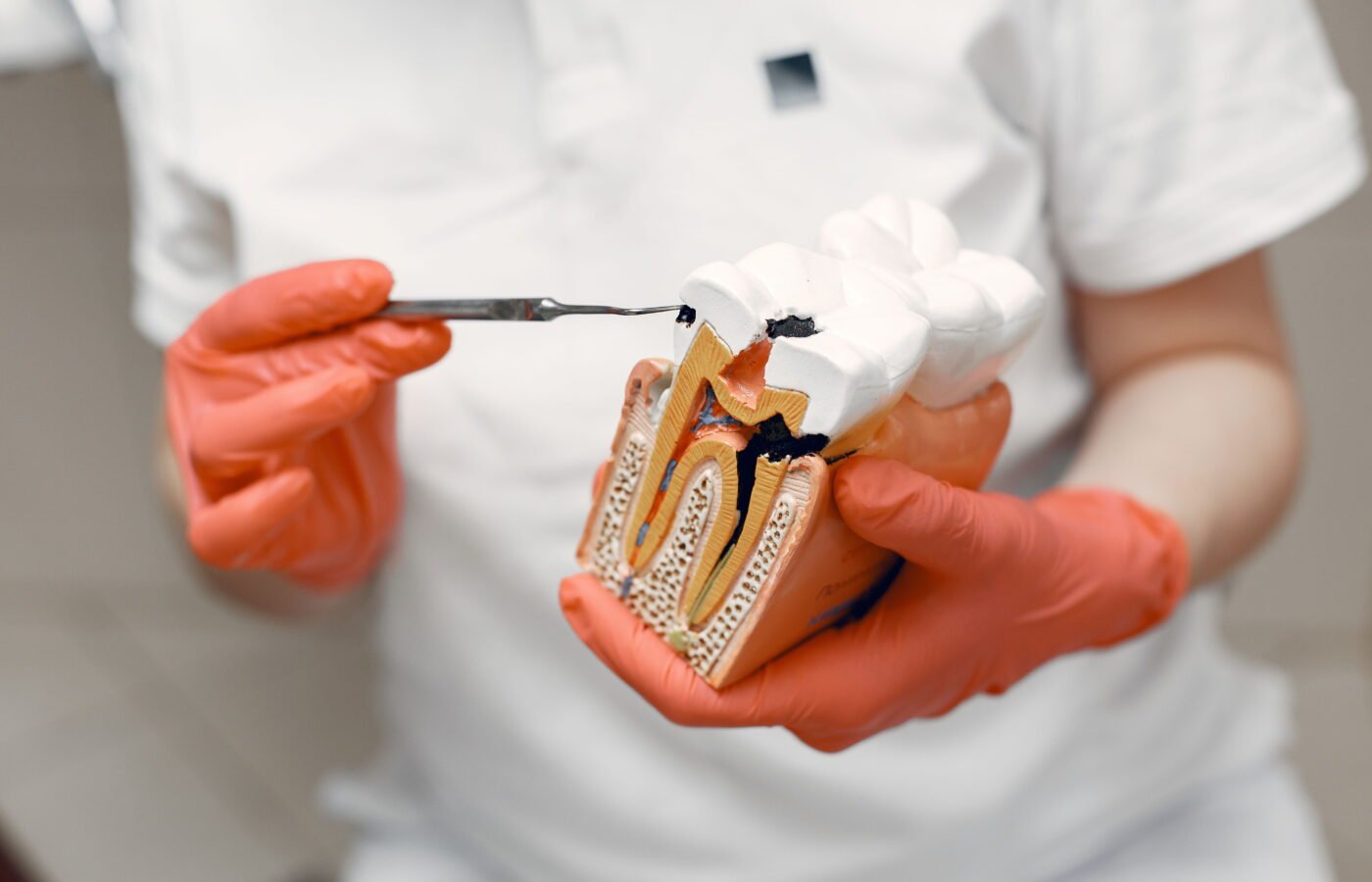
An endodontist is a dentist who specializes in the inside of your teeth — specifically the pulp, nerves, and root canal system. The word itself comes from Greek: “endo” means inside, and “odont” means tooth. So literally, an endodontist is an “inside-the-tooth” specialist.
To become an endodontist, a person first completes dental school like any general dentist, then goes on to complete an additional two to three years of specialized residency training focused entirely on the biology, diagnosis, and treatment of the dental pulp and surrounding tissues. This extra training is what qualifies them as an endodontist rather than just a dentist who happens to do root canals occasionally.
Here’s something most people don’t realize: general dentists can legally perform root canals. But an endodontist does almost nothing else, day in and day out, which means their skill in this narrow area is usually far more refined. Think of it like the difference between a general practitioner doctor and a cardiologist — both are qualified, but one has spent years focusing exclusively on one system of the body.
Endodontist vs. General Dentist: The Real Difference
I get asked this constantly, so let’s settle it clearly.
General dentists handle the broad spectrum of oral health: cleanings, fillings, crowns, extractions, and yes, sometimes root canals. They’re your first point of contact for almost everything dental.
Endodontists focus almost exclusively on:
- Root canal treatment (both routine and complex)
- Retreatment of failed root canals
- Diagnosing tooth pain that’s hard to pinpoint
- Treating traumatic dental injuries
- Endodontic surgery (like an apicoectomy)
The honest verdict here, based on both personal experience and conversations with dental professionals: if your root canal is straightforward — a single, easily accessible canal with no complications — a skilled general dentist can usually handle it well. But if the tooth has unusual anatomy, previous failed treatment, severe curvature in the roots, or you’re someone with a lot of dental anxiety, an endodontist is almost always the better call. Their microscopes, imaging tools, and repetition of this exact procedure give them an edge that’s hard to overstate.
Endodontist vs. Oral Surgeon: Don’t Confuse These
This is where a lot of people get tripped up, so let’s clear it up plainly.
An oral surgeon typically handles extractions, jaw surgery, dental implants, and trauma involving bone and soft tissue. An endodontist stays inside the tooth itself — nerves, pulp, and root canals.
There is some overlap. For example, both might be involved in cases of severe dental trauma, and both can perform certain surgical procedures like an apicoectomy (removing the tip of a tooth root). But generally speaking, if the problem is about saving a tooth from the inside, you want an endodontist. If the problem is about removing a tooth or working with the jawbone, you want an oral surgeon.
What Procedures Does an Endodontist Actually Perform?
Let’s go through the real list, not just the textbook definition.
1. Root Canal Therapy
This is the bread and butter of what an endodontist does. When the pulp inside a tooth becomes infected or inflamed — usually from deep decay, cracks, or repeated dental work — an endodontist removes the damaged tissue, cleans the canal system, and seals it to prevent future infection.
2. Retreatment
Sometimes a root canal that was done years ago fails. Maybe new decay developed, or the original filling material broke down. An endodontist can go back in, remove the old filling material, clean things out again, and reseal the tooth. This is more delicate work than a first-time root canal, and it’s one of the clearest cases where you want a specialist rather than a general dentist.
3. Endodontic Surgery (Apicoectomy)
If infection persists at the very tip of a tooth’s root even after a root canal, an endodontist may need to perform minor surgery to remove that infected tissue directly. This is a more advanced procedure and one where the extra years of training really show.
4. Treating Cracked Teeth
Cracks in teeth are notoriously tricky to diagnose and treat. An endodontist has specialized tools — like dental operating microscopes — to identify exactly where a crack starts and how deep it goes, which determines whether a tooth can be saved at all.
5. Traumatic Dental Injuries
If a tooth gets knocked loose, chipped badly, or displaced from an accident, an endodontist is often brought in to assess whether the pulp has been damaged and whether it can be saved.
How an Endodontist Diagnoses Problems
This part genuinely surprised me the first time I went through it. Diagnosing the source of tooth pain is sometimes harder than treating it, because pain in one tooth can actually be caused by a completely different tooth, or even by sinus pressure.
An endodontist typically uses:
- Cold and heat testing — checking how the tooth’s nerve responds to temperature
- Electric pulp testing — a mild electric current to gauge nerve response
- Percussion testing — tapping on teeth to isolate sensitivity
- 3D imaging (CBCT scans) — cone-beam CT scans that show the full root structure in three dimensions, something a standard dental X-ray simply can’t capture
This last one, CBCT imaging, is a genuine game-changer in modern endodontics. Before this technology became widely available, endodontists were working with flat, two-dimensional X-rays trying to picture a three-dimensional root canal system in their heads. Now they can see extra canals, curves, and fractures that used to be missed entirely.
What a Root Canal Visit Actually Feels Like
I want to be honest here because the reputation root canals have is wildly outdated. In my own experience, the procedure itself was less uncomfortable than getting a filling. The tooth is numbed thoroughly, and most of what you feel is pressure and vibration, not pain.
Here’s roughly how a visit with an endodontist goes:
- Consultation and imaging — they review your history and take images, often including a CBCT scan if needed.
- Numbing the area — local anesthesia, same as you’d get for a filling.
- Isolating the tooth — a small rubber sheet (called a dental dam) keeps the area dry and free of saliva.
- Accessing the pulp — a small opening is made in the top of the tooth.
- Cleaning the canals — infected or damaged tissue is removed using tiny specialized instruments, often under a microscope.
- Shaping and disinfecting — the canals are shaped and thoroughly disinfected.
- Filling and sealing — the canals are filled with a biocompatible material (usually gutta-percha) and sealed.
- Temporary filling — you’ll usually get a temporary filling, and your general dentist will place a permanent crown later.
Most people are surprised at how manageable the recovery is. Mild soreness for a day or two is normal, but the days of root canals being a dreaded, agonizing ordeal are largely a thing of the past thanks to better anesthesia and technique.
Technology in Modern Endodontics
If you’re comparing what an endodontic visit looks like today versus even fifteen years ago, the difference is significant.
- Operating microscopes: These allow endodontists to see canal structures magnified many times over, catching details invisible to the naked eye.
- CBCT scanners: As mentioned, these give a true 3D view of root anatomy.
- Rotary and reciprocating instruments: Modern mechanized files clean and shape canals faster and more consistently than older hand instruments.
- Bioceramic sealers: Newer filling materials bond better and are more biocompatible than older options.
- Apex locators: Small electronic devices that measure canal length electronically, improving accuracy during treatment.
The honest verdict on all this technology: it’s not just marketing fluff. These tools genuinely improve outcomes, reduce treatment time, and lower the chances of a failed root canal down the road. If you’re choosing between two providers and one has invested in this equipment, it’s a meaningful factor worth asking about.
How Much Does an Endodontist Visit Cost?
Costs vary widely depending on location, the complexity of the tooth, and whether it’s a first-time treatment or a retreatment. As a general range in the U.S.:
- Front tooth root canal: roughly $700–$1,100
- Molar root canal (more canals, harder to access): roughly $1,000–$1,800
- Retreatment: often $1,000–$2,000 due to added complexity
- Apicoectomy: roughly $1,000–$1,800
These numbers don’t include the crown that’s usually needed afterward, which can add several hundred to over a thousand dollars depending on the material used. Dental insurance often covers a meaningful portion of endodontic treatment, but always confirm coverage before the appointment — surprise bills in dentistry are unfortunately common.
When Should You Ask for a Referral?
You don’t always get a choice — many general dentists automatically refer complex cases. But if you want to be proactive, consider asking for an endodontist referral if:
- You’ve had a previous root canal fail
- Your dentist mentions unusual root anatomy
- You have significant dental anxiety and want the most experienced hands possible
- The tooth in question is a molar with multiple canals
- You’ve experienced dental trauma
- Pain persists after a previous procedure
There’s no shame in requesting a specialist. Most general dentists welcome the collaboration, since it usually leads to a better long-term outcome for the tooth.
The Future of Endodontics
Having followed this field for a while, a few trends stand out as genuinely promising:
Regenerative endodontics is one of the most exciting areas right now. Instead of simply removing damaged pulp tissue and filling the space, researchers are working on techniques to encourage the body to regenerate healthy pulp tissue, particularly in younger patients whose teeth are still developing. This could eventually reduce the need for traditional root canal fillings altogether in certain cases.
AI-assisted diagnostics are starting to show up in imaging software, helping endodontists spot subtle fractures or missed canals that might otherwise go unnoticed, even by experienced specialists.
Improved bioceramic materials continue to close the gap between “treated tooth” and “natural tooth” in terms of long-term durability and biological compatibility.
My honest take: within the next decade, I expect the line between “saving a tooth” and “replacing a tooth” to blur further, with endodontists playing an increasingly central role in preserving natural teeth that would have been extracted in the past.
FAQs About Endodontists
Is an endodontist a real dentist? Yes. An endodontist completes dental school first, then two to three additional years of specialized residency training.
Do I need a referral to see an endodontist? Usually, yes, through your general dentist, though some endodontic practices accept direct patient inquiries as well.
Is a root canal from an endodontist better than from a general dentist? For complex cases, generally yes, due to specialized training, equipment, and repetition of the exact procedure.
How long does a root canal with an endodontist take? Typically one to two visits, each lasting 60–90 minutes depending on the tooth’s complexity.
Can an endodontist save a tooth that seems hopeless? Often, yes. Many teeth that general dentists consider unsavable can still be treated successfully by an endodontist using advanced imaging and microscopic techniques.
Does insurance cover endodontist visits? Most dental insurance plans cover a portion of root canal treatment, though coverage percentages vary by plan and provider network.
Final Thoughts
Looking back on my own experience, the biggest misconception I had about an endodontist was that seeing one meant something had gone seriously wrong. In reality, an endodontist is simply the right specialist for a very specific, very important job: keeping your natural teeth in your mouth for as long as possible.
Modern endodontics isn’t the fearsome, old-fashioned root canal experience many people still picture. Between better anesthesia, digital imaging, and microscopic precision, seeing an endodontist today is closer to a routine, well-managed dental visit than a dreaded ordeal. If you’re ever referred to one, take it as good news — it usually means your dentist is doing everything possible to save your tooth rather than pull it.
About the Author
This article was written by a dental health researcher and content specialist with a background in reviewing clinical literature on restorative and specialty dentistry. Drawing on interviews with practicing endodontists and general dentists, along with firsthand patient experience navigating root canal treatment, the author focuses on translating complex dental procedures into clear, accurate, and practical information for everyday readers. This piece is intended for educational purposes and does not replace personalized advice from a licensed dental professional.